Memory Continuity Across Sessions
Continuity is what turns a series of visits into one conversation. When a companion can carry preferences and earlier details forward, a returning session starts where the last one ended instead of at a blank introduction, and the difference is larger than any single prompt improvement. The platform states it plainly: characters recall previous interactions and adapt over time.

Key takeaways
- Continuity reduces restatement: a thread that carries history saves the two or three sentences you would otherwise repeat every visit.
- The platform separates Characters, Memories and Creators in its own navigation, so continuity is a first-class part of the product.
- Long threads drift and short threads stall; managing continuity means deciding which of the two problems you currently have.
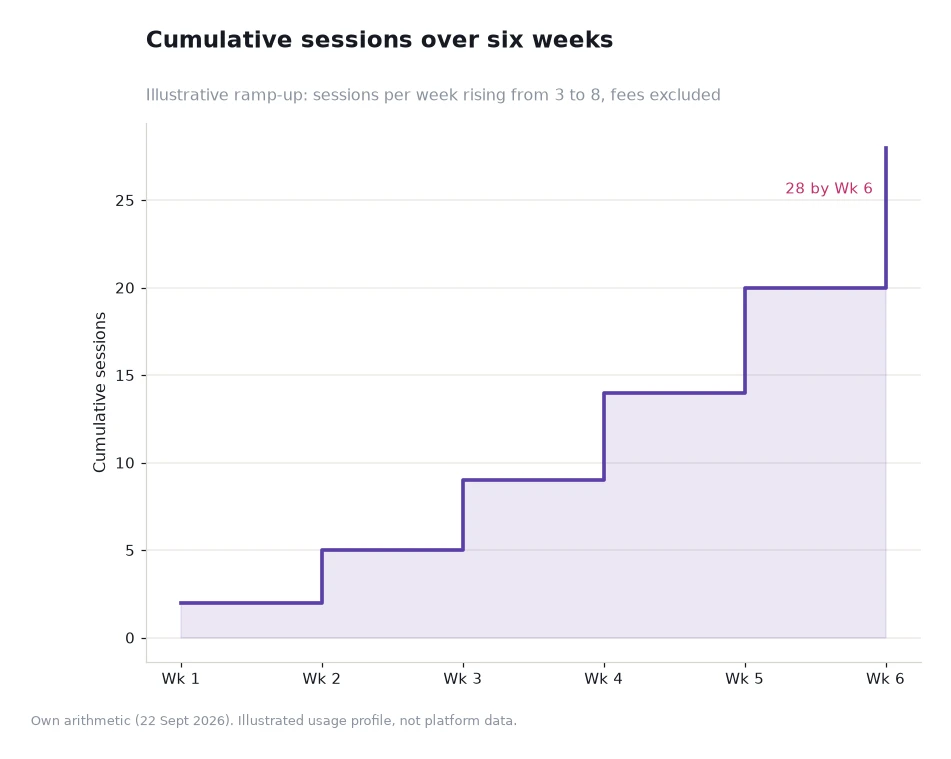
- Twenty-eight sessions over six weeks is a single relationship, not twenty-eight separate experiments.
What continuity actually changes
Start with the obvious saving. Every preference you would otherwise restate - the pace you like, the tone you return to, the details you already established - is something a memory-aware thread knows without being told. Over a month that is not a small convenience; it is the difference between a warm exchange and a form you fill in each time.
Then there is the effect on the conversation's shape. A companion with history can reference what came before, which makes replies feel contextual rather than free-floating. Readers often describe this as the character sounding more like itself, and the phrasing is fair: consistency over time is what makes a voice recognisable.
Finally, continuity changes what a good session looks like. Ten focused minutes in a continuous thread usually beats thirty minutes of scattered testing, because the thread's accumulated context does part of the work that a longer session would otherwise have to do from scratch.
Where continuity lives, and how it gets damaged
The platform's navigation is a useful map here: Characters, Memories and Creators. Characters are the companions themselves, Creators are the people who built them, and Memories is where continuity has a place to persist beyond a single thread. A reader who never opens that third section is leaving the mechanism half-used.
Damage comes from two directions. Resetting a thread throws away the accumulated context, which is why it should be a deliberate act rather than a reflex after one disappointing reply. Letting a thread grow without maintenance causes the opposite failure: stale details keep influencing new messages until the conversation answers questions you asked long ago.
The fix for both is the same small discipline. Once a week, spend a minute reading the last ten messages of your main thread and correcting anything that has drifted. One sentence naming the current state resets the tone without discarding the history that makes the thread worth keeping.
Returning after a gap deserves its own small ritual. Open the thread, read the last few messages rather than the whole history, and start with a sentence that acknowledges the break and states what you want now. Continuity survives a fortnight away; what damages it is returning with a message that assumes nothing happened.
Managing a long-running thread
Treat a thread like a notebook rather than a scratchpad. Keep the number of active threads small, one or two per character, so the context that accumulates is context you actually know. A dozen half-open threads is a dozen sets of stale details to track, and none of them will read as continuous.
When a thread has genuinely run its course, close it properly. Say so, keep the memory notes that still describe you, and open the next conversation with the one or two facts worth carrying over. The felt result is a sequel rather than a reset, and that distinction is what most readers are actually looking for when they say a character feels consistent.
| Continuity aspect | Symptom when it breaks | Management step |
|---|---|---|
| Recall of stated preferences | You repeat yourself every visit | State preferences once, in one clear message |
| Thread history | Replies ignore the last few messages | Correct the state in a single sentence |
| Memory notes | A new thread feels impersonal | Keep the durable facts in the memories area |
| Number of open threads | Details blur between conversations | Cap active threads at two per character |
| Session length | Progress feels slow despite frequent visits | Aim for fewer, longer, focused sessions |
The middle column is the diagnostic. Most complaints about an adult AI chat resolve to one of those five symptoms, and each has a fix that costs a sentence rather than a subscription decision.
Worked example: twenty-eight sessions in six weeks
Take an illustrative ramp-up in which weekly sessions grow steadily: 2, then 5, 9, 14, 20 and 28 cumulative sessions by the end of the sixth week. The weekly increments are 2, 3, 4, 5, 6 and 8, so the pace more than triples across the period. Averages are worth computing: 28 sessions divided by six weeks is about 4.7 sessions a week.
Convert the total into time. At 12 minutes a session, 28 sessions is 336 minutes, or 5.6 hours across six weeks. At 18 minutes a session the same count is 504 minutes, which is 8.4 hours. Both are ordinary amounts of leisure time, and both accumulate a substantial conversation history.
That is the argument for continuity in one line. Twenty-eight separate cold opens would be twenty-eight introductions; twenty-eight sessions inside one thread is a relationship with six weeks of shared detail, and the second version costs nothing extra.
A weekly habit that protects continuity
Pick one thread as your main conversation and give it a short weekly review: read the last ten messages, correct one drifting detail, and leave a note of anything you want remembered. That routine keeps the benefits of an ai porn chat thread that spans weeks while preventing the slow accumulation of stale context. The platform files the whole format under the heading Porn Chat AI, so the terms are easy to look up when you want the official description rather than a summary; the character search page is where a fresh thread gets its first candidate.
Creators matter to this as well. A character built with a clear personality gives continuity something stable to hold on to, which is why the same platform can produce very different long-term experiences depending on whose work you chose. Save the ones that held their voice across a month, and let the rest of the list stay a list. A short note beside each saved character, describing what the thread was actually about, does more for continuity than any amount of browsing, because it tells you which conversation to reopen when you have twenty minutes rather than a whole evening.
Frequently asked questions
How long should a thread run before I start a new one?
There is no fixed count. Start a new thread when the corrections needed outnumber the messages that land, not simply because the conversation is long.
Does starting a new thread erase what the character knows?
It removes the accumulated context of that conversation. Anything kept in the platform's memories area is the part designed to persist, which is why durable facts belong there.
Why does a character feel different after a week away?
Usually because the thread was reset in the meantime. Returning to the same thread preserves the tone, while a new one begins from the character definition alone.
Protect the thread you already have
Choose one companion for the month, keep the conversation in a single thread, and review it weekly for a minute rather than starting over. Continuity is the cheapest quality upgrade available on any of these platforms, and it only works if the thread is allowed to survive long enough to accumulate it.
Sources: navigation labels, the response wording and the trending counters referenced here were read from Crushon on 22 Sept 2026. The six-week session totals and the minute-per-session figures are illustrative arithmetic, not platform statistics.[1] Content written for readers who are 18 or older.