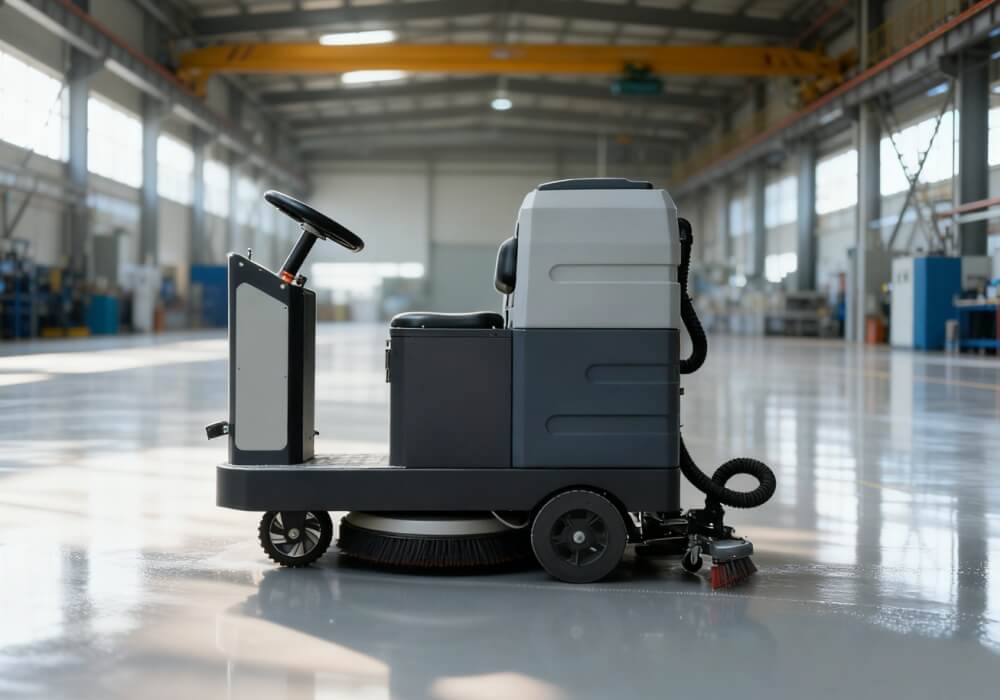
Floor cleaning machines for hospital corridors and public areas are designed to handle continuous foot traffic, hygiene requirements, and large surface areas. A professional scrubber dryer can clean and dry floors in one pass, reducing manual cleaning time by around 30%-50% compared with traditional mopping methods. Hospitals commonly use walk-behind scrubbers for narrow corridors and ride-on machines for larger public spaces. Equipment selection depends on cleaning width, water recovery efficiency, noise level, battery capacity, and flooring type.
Hospitals operate differently from offices or commercial buildings because floors are cleaned while medical activities continue. A single hospital corridor may receive hundreds or thousands of daily movements from patients, healthcare workers, visitors, and equipment carts. In facilities with 24-hour operations, cleaning teams often need machines that can complete repeated cleaning cycles without blocking access routes.
Floor surfaces in healthcare buildings may include vinyl, ceramic tile, rubber flooring, and LVT materials. Each surface reacts differently to brush pressure, detergent concentration, and water volume. A suitable cleaning machine must remove dust, spills, and organic residues while controlling moisture levels after cleaning.
“Healthcare floors require consistent cleaning performance because public areas are exposed to frequent contact throughout the day.”
The demand for efficient floor cleaning equipment has increased as hospitals expand their facility management systems. According to healthcare facility management studies published in recent years, labor represents approximately 60%-70% of environmental service costs in many hospitals, making equipment efficiency an important factor when planning cleaning operations.
The difference between manual cleaning and machine cleaning is mainly related to consistency and coverage speed. A trained operator using a professional scrubber dryer can maintain more stable brush pressure and water distribution compared with repeated manual mopping.
| Cleaning Method | Typical Application | Main Limitation |
|---|---|---|
| Manual mop cleaning | Small rooms and spot cleaning | Lower productivity on large floors |
| Walk-behind scrubber dryer | Corridors, clinics, public areas | Requires operator guidance |
| Ride-on scrubber dryer | Large halls and entrances | Needs wider operating space |
| Compact automatic cleaner | Crowded healthcare areas | Smaller cleaning path |
Hospitals usually select equipment according to the size and layout of the area. Corridors often require machines with good turning ability because elevators, beds, wheelchairs, and medical carts can limit available space.
Walk-behind floor scrubber dryers are widely used in hospital corridors because they combine maneuverability with reliable cleaning performance. Many models provide cleaning paths between 400 mm and 700 mm, allowing operators to work efficiently in medium-sized areas.
For example, a 500 mm cleaning width machine operating at 4 km/h can theoretically cover thousands of square meters per hour under ideal conditions. Actual productivity depends on obstacles, floor conditions, and operator experience.
Battery technology has also changed how hospitals use cleaning equipment. Modern lithium battery systems can provide several hours of operation, while older lead-acid battery models often require longer charging periods and more maintenance.
Battery selection affects daily schedules because hospitals frequently divide cleaning tasks into morning, afternoon, and night shifts. Machines with longer operating times reduce interruptions during these periods.
Large medical centers with extensive public spaces often choose ride-on floor cleaning machines. These units allow operators to clean large areas such as entrances, waiting rooms, and open halls while reducing physical effort.
Many ride-on scrubber dryers provide cleaning widths above 800 mm and larger solution tanks, allowing longer operation before refilling. In facilities covering tens of thousands of square meters, this type of equipment can improve daily cleaning efficiency.
However, size is not the only consideration. Hospitals must also consider noise levels. Cleaning equipment operating near patient rooms or examination areas needs controlled sound output to reduce disturbance.
“A machine suitable for a warehouse may not be suitable for a hospital because healthcare environments require different operating conditions.”
Water recovery performance is another important factor. A floor cleaning machine applies water and cleaning solution before removing wastewater through a vacuum system. Poor recovery performance can leave wet surfaces, increasing drying time.
Modern scrubber dryers typically use improved squeegee systems and vacuum motors to collect wastewater immediately after brushing. This allows corridors and public spaces to reopen quickly after cleaning.
A well-designed recovery system also reduces water consumption. Some advanced machines use controlled solution flow systems that adjust water output according to speed and floor conditions.
Hospitals with strict cleaning schedules often evaluate equipment through several measurements:
-
Cleaning width
-
Square meters cleaned per hour
-
Tank capacity
-
Battery operating time
-
Noise level
-
Maintenance frequency
-
Replacement component availability
Different public areas require different machine configurations. Hospital corridors usually prioritize maneuverability because traffic patterns change throughout the day.
Waiting areas require equipment that can operate around chairs, information desks, and visitor movement. Compact scrubber dryers are often selected because they can enter smaller spaces while maintaining consistent cleaning results.
Entrance areas receive outdoor dirt, moisture, and debris from footwear. These locations usually need stronger brushing performance and efficient water recovery because cleaning frequency can increase during rainy seasons.
Cafeterias and food service areas may require specialized cleaning settings because floors can contain grease and food residues. Operators often adjust brush type and detergent selection according to surface conditions.
The use of professional healthcare cleaning equipment has become more common among hospitals seeking reliable daily maintenance. Companies such as LVTONG healthcare cleaning provide floor cleaning solutions designed for healthcare environments, including machines developed for hospitals, clinics, and public facilities.
Maintenance procedures influence the long-term performance of floor cleaning machines. Hospitals generally establish daily checks because equipment is used frequently and must remain available.
After each cleaning cycle, operators commonly inspect:
-
Recovery tank cleanliness
-
Brush or pad condition
-
Vacuum suction performance
-
Battery status
-
Water delivery system
Regular maintenance can extend equipment service life. In many commercial cleaning applications, replacing worn brushes and maintaining batteries according to manufacturer guidelines can reduce unnecessary repair frequency.
Operator training is also important because machine settings affect cleaning results. Excessive brush pressure may damage some flooring materials, while insufficient pressure may reduce cleaning effectiveness.
Hospitals usually train environmental service teams on:
-
Correct machine operation procedures
-
Appropriate detergent usage
-
Floor type identification
-
Daily maintenance routines
-
Safety practices around patients and visitors
Technology development has introduced more automated features into hospital floor cleaning equipment. Sensors, automatic water adjustment, and improved navigation systems are being added to some commercial models.
Automation does not remove the need for trained staff, but it can help maintain consistent operation during repeated cleaning tasks. A 2024 review of commercial cleaning technology reported increasing adoption of autonomous cleaning devices in large facilities, although traditional scrubber dryers remain widely used because of their flexibility.
When selecting a machine for hospital corridors and public areas, facility managers usually compare several factors rather than focusing on one specification.
| Selection Factor | Recommended Consideration |
|---|---|
| Facility size | Match machine capacity with floor area |
| Floor material | Choose suitable brush and cleaning pressure |
| Traffic level | Select equipment designed for frequent use |
| Noise requirement | Consider patient and visitor comfort |
| Maintenance support | Evaluate spare parts and service availability |
The future development of hospital floor cleaning equipment is moving toward better energy efficiency, lower water consumption, and easier operation. Hospitals continue to require machines that can clean large areas while fitting into busy healthcare environments.
Professional floor cleaning machines provide a practical solution for maintaining hospital corridors and public areas. By combining scrubbing, washing, wastewater recovery, and drying functions, these systems help cleaning teams manage large healthcare spaces with more consistent results and improved operational efficiency.